

Quick Summary
Long wear lipgloss stays on all day when you prep the lips, apply thin layers, and let the formula set before eating or drinking. Liquid and matte formulas with film-forming ingredients generally hold color longest, while hydrating options help dry lips stay comfortable.
- Blot lips before applying color to remove surface oil that breaks down the formula.
- Apply two thin coats rather than one thick coat, blotting and waiting 30 to 60 seconds between layers.
- Use a lip liner to create a boundary that slows feathering into fine lines.
- Wait the full set time before eating, drinking, or pressing your lips together.
- Remove matte colors with an oil-based remover, then reapply a plain balm to restore the barrier.
Table of Contents
- What Makes a Long Wear Lipgloss Stay On All Day
- Non-Drying Long-Lasting Lipstick for Dry and Sensitive Lips
- How to Make Lipstick Last All Day: Prep, Application and Touch-Ups
- Kiss-Proof and Transfer-Resistant Options: What to Check on the Label
- Removing Long Wear Lipstick Without Irritating Your Lips
- Choosing Your Shade and Trying iBLipSilk's Hydrating Long Wear Range
- Frequently Asked Questions
Last Updated: October 31, 2026
Long wear lipgloss that stays on all day is harder to find than most product pages suggest, and many formulas that promise staying power leave lips tight, flaky, or dry by mid-afternoon. At iBLipSilk, we focus on hydrating lip colors that combine rich color with comfort. This guide explains what makes a long wear lipstick stay put, how to choose the right formula for dry or sensitive lips, and how to get the most from any product you buy.
What Makes a Long Wear Lipgloss Stay On All Day
Long wear lipgloss is a formula designed to resist transfer, fading, and smudging over several hours. The key differences usually come down to texture and how the pigment bonds to the lips.
Liquid versus traditional formulas
Traditional bullet lipsticks rely on waxes and oils, which give a soft glide but rub off on cups, food, and collars. Liquid long wear formulas use film-forming polymers that dry to a flexible layer that holds color better, though it can feel heavier at first. Expect a minute or two of drying time before the color sets.
Finish and transfer resistance
Matte finishes generally last longest because they contain less oil and set firmly. Satin and sheer finishes look softer but may need a touch-up sooner. Transfer resistance depends on how completely the formula dries, so let any product set before you eat, drink, or put on a mask.
Non-Drying Long-Lasting Lipstick for Dry and Sensitive Lips
Many people with dry lips assume they must choose between hydration and wear time. That is not always true. Look for formulas that pair film-forming pigments with hydrating ingredients.
If your lips are chapped, apply a thin layer of a plain balm and let it absorb before applying color.
Sensitive lips respond best to fragrance-free formulas with short ingredient lists.
How to Make Lipstick Last All Day: Prep, Application and Touch-Ups
Good prep is the single biggest factor in how long color stays on, but prep alone will not save a formula that is applied badly or worn through an oily lunch. The steps below cover preparation, application, troubleshooting, and realistic touch-up strategy.
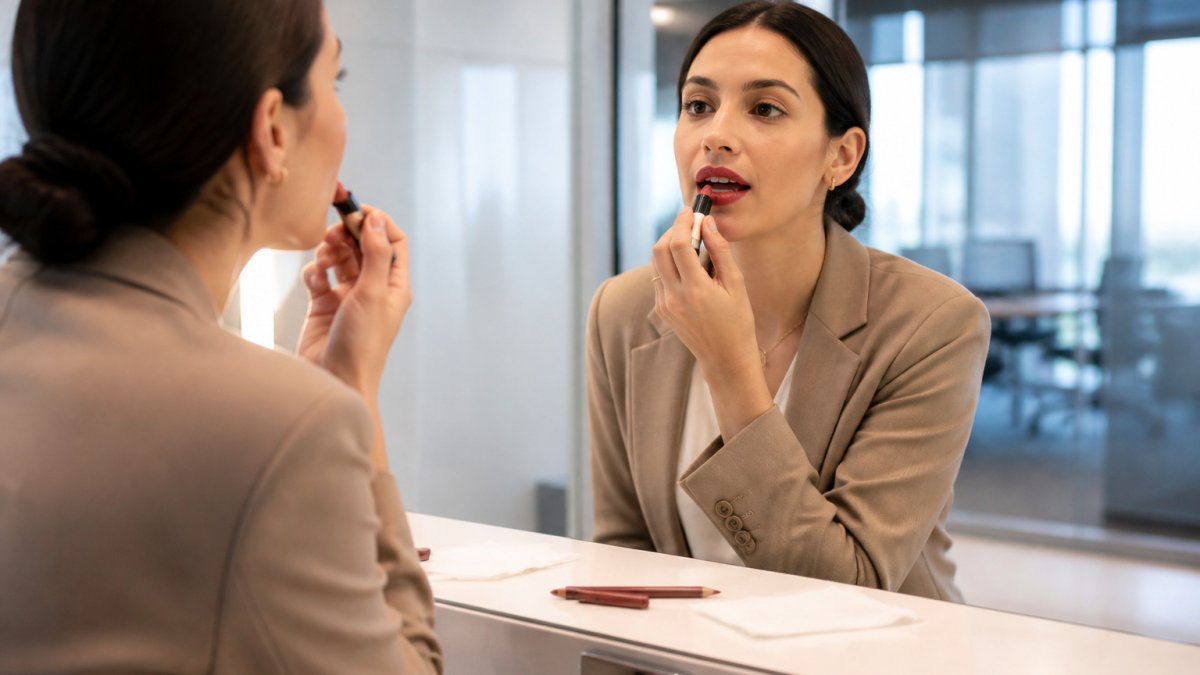
Prep that actually extends wear
Exfoliate gently once or twice a week with a soft cloth or a dedicated lip scrub. Avoid harsh sugar scrubs right before application, since they can leave micro-abrasions that make color settle unevenly.
If your lips are chronically dry or chapped, spend a few days on barrier repair before wearing long-wear color. A guide on treating chapped lips can help you identify whether you need simple moisturizing or a more focused routine.
Application: thin layers, blotting, and liner
Outline your lips with a lip liner that matches or sits slightly deeper than your lipgloss shade. The liner creates a boundary that slows feathering, especially with liquid formulas that can travel into fine lines around the mouth.
Apply color in thin layers rather than one thick coat. Blot with a tissue between coats and give each layer 30 to 60 seconds to set.
Troubleshooting: feathering, patchiness, cracking, and uneven fading
Even good formulas misbehave under certain conditions. Here are the most common problems and practical fixes:
- Feathering into fine lines: Usually too much product or a thin, oily formula. Use a clear or matching lip liner as a barrier, apply less product, and avoid gloss or balm on top of long-wear color near the lip edges.
- Patchiness after application: Often from oily or unevenly moisturized lips. Blot thoroughly before applying, and build color in thin layers instead of trying to correct a patch with more product.
- Cracking or flaking during the day: Typically a sign the formula is too drying or you applied too thick a layer. Remove with an oil-based remover at day's end, rehydrate overnight, and try a thinner application next time. A hydrating long-wear formula can help reduce this.
Eating, drinking, and what it does to wear time
Eating removes more color than almost anything else, but not all meals are equal. Resistance to water, oil, and friction are different properties.
A practical approach is to blot before meals, eat, and then reapply after eating rather than before. Drinking through a straw reduces contact with the rim of a cup and helps color last longer.
Touch-up strategy
Keep a travel-sized product in your bag for midday touch-ups. Dab rather than swipe, and blot after applying to keep the finish even. If the color has faded unevenly, remove the remaining color from the center of the lips with a tissue and reapply a thin layer over the whole lip rather than patching one spot.
Kiss-Proof and Transfer-Resistant Options: What to Check on the Label
Terms like kiss-proof and transfer-resistant are marketing language, not regulated categories. That means two products can use the same phrase and perform very differently. Instead of trusting the front of the package, look for specific clues about how the formula is designed and how its claims were tested.
What transfer resistance actually means
Transfer resistance is not one property. It is a combination of resistance to water, oil, and friction. A formula that resists water may still transfer onto a glass of olive oil or a greasy meal, and one that resists friction may still break down when you sip a hot drink.
Transfer-resistant formulas often use film-forming ingredients that dry into a layer holding color against the lips.
Label clues worth looking for
Look for words like "long-wearing polymer," "set time," "transfer-resistant," or "film-forming" in the product description. Check whether the formula is liquid, matte, or cream-based, since format affects how well color holds.
Be cautious with claims that do not explain how they were measured. A brand that publishes its testing method, even briefly, is giving you more to work with than one that simply prints a number on the box.
How to test transfer resistance yourself
You can evaluate a product's transfer resistance at home with a simple, consistent test. Apply the product according to its instructions and wait the full set time.
This kind of at-home testing will not give you laboratory-grade numbers, but it will tell you more than a label claim. A product that survives the tissue press but fails the oily food test is telling you something specific about what it resists and what it does not.
Matching the formula to your day
If your priority is surviving coffee and meetings without touch-ups, a liquid matte with a film-forming polymer is usually the most practical choice.
Customer reviews can help too, but read them with the same skepticism you apply to labels. Look for comments that mention how the color held up after meals and drinks, not just the first hour.
Removing Long Wear Lipstick Without Irritating Your Lips
Long-lasting formulas are designed to resist water, which means regular face wash often will not remove them. Use an oil-based cleanser or a gentle lip makeup remover, applying it to the lips for 10 to 20 seconds before wiping.
After removing the color, reapply a plain balm or a hydrating lip treatment. This restores the barrier and reduces tightness the next day.
Choosing Your Shade and Trying iBLipSilk's Hydrating Long Wear Range
Shade choice matters more with long wear formulas than with sheer glosses, because the color is more concentrated and shows every line on the lips. Start with a shade one or two tones away from your natural lip color if you are new to bold pigment, and build up from there.
If you want a hydrating option with long-lasting color, the Ib Lip Silk Lip Gloss range is designed for people who want both comfort and staying power. Our Lip Therapy formula is built for dry and sensitive lips, and the How to Fix Chapped Lips Fast guide walks through a recovery routine if your lips need repair before you start wearing long-lasting color.
Start with one shade, wear it for a full day, and note how it holds up through meals and meetings.
Frequently Asked Questions
How long does long-wear lipstick usually last?
Wear time varies by formula, skin type, and what you eat or drink. Liquid long-wear formulas are generally designed to last longer than traditional creamy bullet lipsticks, and many are marketed for several hours of wear. Eating a full meal or drinking from a glass will remove some color, so plan a touch-up after lunch. Check the product details for each shade on iBLipSilk's website, and test a shade on a normal workday before relying on it for a long event.
How do you keep long-wear lipstick from drying out your lips?
Start with a hydrating lip base: a thin layer of balm, left to absorb for a minute, then blotted. Apply long-wear color in thin layers rather than one heavy coat, and avoid drying ingredients if your lips are sensitive. Reapply a small amount of balm or lipstick at lunch rather than scrubbing the lips to reset the color. If a formula still feels tight after a few hours, it may not suit your lips, so try a more hydrating option.
Should you use lip liner with long-lasting lipstick?
Lip liner helps long-wear lipstick stay put, especially at the edges where color tends to feather and fade first. Choose a liner close to your lipstick shade or a clear or neutral liner for a more natural look. Line first, then apply the lipstick, and blot once before a final coat to set the color. This step matters most for matte and high-pigment shades.
Which lipstick is best for kiss-proof wear?
Kiss-proof or transfer-resistant lipsticks are formulated to leave less color on cups, napkins, and other people. The most reliable way to judge them is the label and an honest test: look for transfer-resistant claims, then press a tissue to your lips after a few minutes to see how much color comes off. Keep in mind that no lipstick is completely transfer-proof, and that oily foods will still loosen color over time.
Ready to find a long wear shade that works with your lips? Explore the iBLipSilk hydrating range and try a formula designed for all-day comfort.
