

Quick Summary
Natural lip makeup can be gentle for sensitive skin, but "natural" does not guarantee it. Fragrance, flavoring, essential oils, and drying alcohols are common triggers, so checking the ingredient list and patch testing each new product matters more than the label.
- Fragrance and flavoring are among the most common causes of reactions on the lips.
- A "natural" or "plant-based" label does not guarantee a product is non-irritating.
- Test a new lip product on the inner wrist or behind the ear and wait at least 24 hours.
- Introduce new lip products one at a time, with a few days between them.
- Stop using a product if burning, swelling, or worsening flaking appears.
Table of Contents
- Why Lip Makeup Irritates Sensitive Lips
- Lipstick Ingredients to Avoid for Sensitive Lips
- What to Look for in Natural Lip Makeup for Sensitive Skin
- Vegan Lipstick for Sensitive Skin: Comparing the Options
- Fragrance-Free Lip Balm with Color: When It Makes Sense
- How to Patch Test Lip Products Before Full Use
- Choosing Your First Gentle Lip Product from iBLipSilk
- Frequently Asked Questions
Is Natural Lip Makeup Safe for Sensitive Skin?
Last Updated: November 1, 2026
Why Lip Makeup Irritates Sensitive Lips
No lip product is automatically safe for every person. The lips have a thinner skin barrier than most of the face, so irritation shows up quickly. Many people with sensitive skin notice stinging, tightness, or flaking after a few hours in a lipstick that looks harmless on the label.
Most of that reaction comes from a short list of usual suspects. Fragrance, certain preservatives, and some waxes or pigments can trigger a response even when a product is marketed as gentle. Drying ingredients are the other common problem, because they pull moisture away from already fragile lips. The result feels like the product is attacking the lips, even though the cause is a single ingredient.
People with chronically dry or chapped lips often make this worse without realizing it. A long-wear lip color can sit on dry skin, catch on flakes, and create a cycle of irritation and reapplication. If your lips are already dry or chapped, a recovery routine may be worth considering before you add new products. Step-by-step fixes for chapped lips lay out a proven routine to follow first.
Lipstick Ingredients to Avoid for Sensitive Lips
Ingredient lists are a useful way to judge a lip product, but reading them well takes practice. The goal is not to memorize a universal "bad" list, sensitivities vary from person to person, but to recognize the categories most often linked to reactions and to compare them against your own history.
Fragrance and flavoring. "Fragrance" or "parfum" is a catch-all that can represent dozens of undisclosed compounds, and it is one of the most common causes of contact reactions on the lips. Flavoring deserves equal scrutiny: mint, cinnamon, citrus, and other strong flavor oils can sting on already-compromised skin. If you have reacted to scented or flavored products before, treat both categories as high-priority checks.
Essential oils and plant extracts. A "natural" or "plant-based" label does not guarantee a product is non-irritating. Essential oils such as peppermint, eucalyptus, and citrus peel oils contain volatile compounds that can provoke sensitivity, and botanical extracts can do the same. This is the clearest example of why natural claims and hypoallergenic claims are not interchangeable.
Preservatives and waxes. Some people react to specific preservatives, and certain waxes or pigments can trigger responses in sensitive individuals. There is no single preservative or wax that is universally safe or universally problematic, the relevant question is whether you have reacted to it before.
Drying alcohols. High concentrations of drying alcohols can pull moisture from the lips and worsen tightness or flaking, especially in long-wear formulas.
What to Look for in Natural Lip Makeup for Sensitive Skin
A sensible starting point is a short, recognizable ingredient list. Look for familiar moisturizers and emollients, which many people with sensitive lips tolerate well. Vitamin E is another common addition in gentle formulas.
Fragrance-free formulas remove one of the most frequent triggers. Gluten-free and vegan labels tell you about the ingredient sourcing, but they do not tell you how a product will feel on your lips. For that, check whether the product is described as hydrating, soothing, or protective, and whether the color payoff suits your daily routine.
Vegan Lipstick for Sensitive Skin: Comparing the Options
Vegan lipstick and balm-style products can both work well for sensitive lips, but they serve different needs. Vegan formulas avoid animal-derived ingredients such as beeswax or lanolin, so they suit people who avoid animal products. They do not automatically avoid irritants, so check the full list the same way you would for any other product.
Our lineup gives you a few clear options to compare:
| Product | Starting Price | Format | Best For |
|---|---|---|---|
| IB Lip Silk Lip Gloss | $21.00 | Gloss | Full pigment with a lighted applicator |
| Lip Therapy A | $15.00 | Treatment | Aloe flavor, comfort-focused care |
| Mint Lip Therapy | $12.00 | Lip oil | Shea-based moisture and softness |
| Lip Therapy W | $15.00 | Treatment | Watermelon flavor, everyday care |
Best for: people who want a vegan option with visible color and a lighted applicator. Skip if: you want a completely unscented formula, because flavored lip products are not fragrance-free.

Fragrance-Free Lip Balm with Color: When It Makes Sense
A tinted, fragrance-free balm makes sense when your lips are reactive, but you still want some color. The trade-off is lighter pigment and a softer finish than a full lipstick. For many people with sensitive lips, that is an acceptable exchange.
The clearest signal is a history of stinging from flavored or scented products. If that describes you, a simpler formula with fewer ingredients is usually the better choice. Mint and watermelon flavors appear in some of our options, so read the description before you buy if you need to avoid flavor entirely.
How to Patch Test Lip Products Before Full Use
Patch testing is the safest way to introduce any new lip product, but lips need a slightly different approach than the rest of the face. A common pattern is to start with a small amount on the inner wrist or behind the ear, wait at least 24 hours, and then, if there is no reaction, test a tiny amount on the lip itself before committing to full wear.
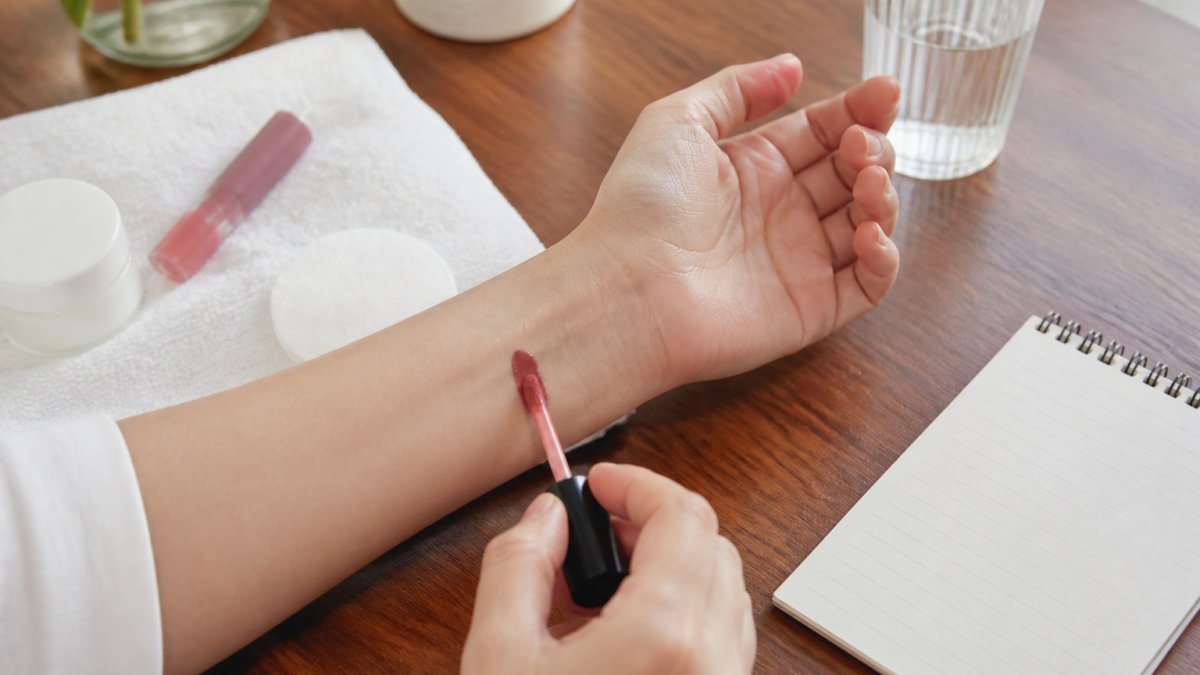
Step-by-step approach:
- Test one product at a time. If a reaction appears, you need to know which product caused it. Introduce new lip products one at a time, with a few days between them.
- Start away from the lips. Apply a small amount to the inside of your wrist or behind your ear. Wait at least 24 hours. Repeat over two or three days if your lips are highly reactive.
- Move to a small lip test. If there is no reaction, apply a tiny amount to one small area of the lip and wait several hours before applying it fully.
- Monitor for specific symptoms. Stop using the product if you notice burning, stinging, swelling, persistent redness, or flaking that worsens with use. Mild tingling that fades quickly is different from burning that builds, when in doubt, stop.
- Record what happened. Note the date, the product, and how your skin felt. This log makes future decisions faster and helps you spot patterns across products.
!Close-up of a hand dabbing a small amount of tinted lip product onto the inside of the wrist beside a clean white towel and a notepad
Choosing Your First Gentle Lip Product from iBLipSilk
Start with the product that matches your main need. If you want color and hydration in one step, IB Lip Silk Lip Gloss is the most complete option in our range at $21.00. If your lips need treatment first, Lip Therapy A or Lip Therapy W are also available at $15.00 each.


Patch test your first product, wear it for a few short sessions, and only then expand your routine.
Frequently Asked Questions
What natural lip makeup is best for sensitive skin?
Look for short ingredient lists built around well-known moisturizers such as shea butter, jojoba oil and vitamin E, with no added fragrance. Lip products that are both vegan and fragrance-free remove two common triggers at once. Check the full ingredient list rather than relying on front-of-pack words like natural or clean, since those terms are not standardized. Start with one product, use it for a few days, and watch how your lips feel before adding anything else to your routine.
Which lipstick ingredients can irritate sensitive lips?
Fragrance and essential oils are the most frequent irritants in lip products, along with some flavorings and certain preservatives. Drying ingredients such as high concentrations of alcohol can also leave lips feeling tight and flaky. Pigments and waxes are less likely culprits but can still cause reactions in some people. Reading the ingredient list and noting which ingredient appeared in products that caused trouble makes it easier to spot your personal triggers.
How do I patch test a new lip product?
Apply a small amount to the inside of your wrist or behind your ear and leave it for at least 24 hours, ideally longer. Then apply a thin layer to a small area of your lower lip and wait another day. Stop if you notice redness, itching, swelling or burning. Patch testing one product at a time is the only reliable way to know which product caused a reaction. If you have a history of skin reactions, consider speaking with a dermatologist before trying new formulas.
Is natural lip makeup better for sensitive skin?
Not automatically. Natural and vegan labels describe where ingredients come from, not whether they will irritate your lips. A plant-derived ingredient can still cause a reaction, and a synthetic one can be gentle. The more useful questions are whether the formula is fragrance-free, how short the ingredient list is, and whether you have tolerated its individual ingredients before. Patch testing is still needed regardless of the label.
